When chronic pain, structural imbalances, or persistent musculoskeletal tension begin to compromise your quality of life, finding a definitive solution becomes paramount. Navigating the world of conservative, non-invasive medicine often leads to two primary modalities: chiropractic care and acupuncture. While both disciplines share a foundational philosophy empowering the human body to heal inherently without reliance on pharmaceuticals or invasive surgical interventions their clinical mechanisms, diagnostic frameworks, and therapeutic targets are distinct.
Deciding which treatment pathway aligns with your specific physiological needs requires a clear understanding of how each modality interacts with your nervous, structural, and vascular systems. This comprehensive guide details the scientific principles, distinct benefits, and optimal clinical applications of both therapies to help you make an informed decision for your long-term health.
Deconstructing the Modalities: Clinical Foundations
To evaluate which intervention is best suited for your health goals, we must first analyze the biomechanical and physiological principles that govern each practice.
The Mechanics of Chiropractic Care
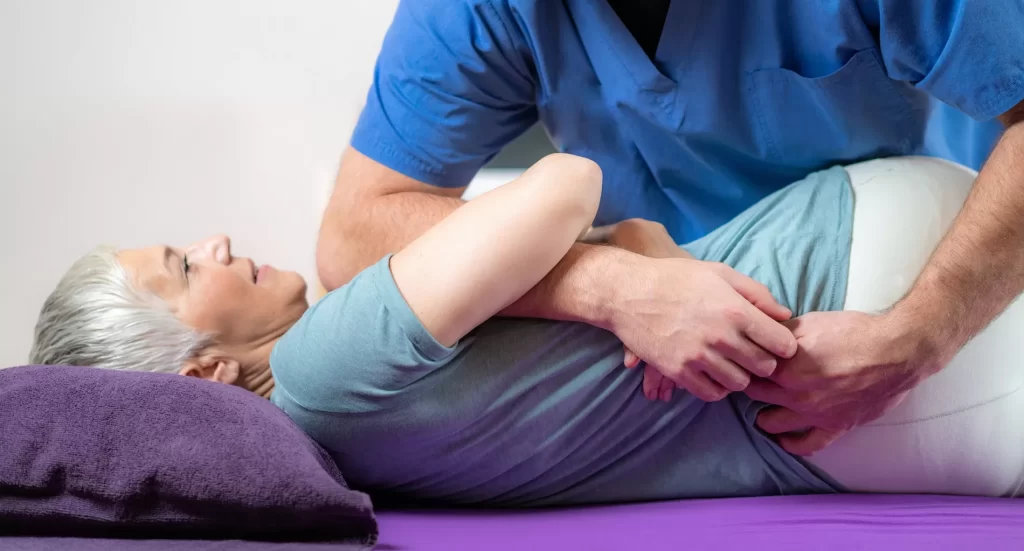
Chiropractic medicine is a primary healthcare discipline focused on the precise relationship between the structure of the body principally the spinal column and the function of the central nervous system. The fundamental premise of chiropractic care revolves around the identification and correction of vertebral subluxations. A subluxation occurs when a spinal joint segment loses its normal alignment or mobility, creating localized mechanical stress and micro-inflammation. This physical distortion can alter or impede neurological signaling traveling between the brain and the peripheral body. Because the nervous system acts as the master control center for every tissue, organ, and muscle group, spinal joint dysfunction can manifest as localized pain, restricted range of motion, neuropathies, and systemic functional imbalances. To address this, chiropractic physicians utilize targeted, highly controlled forces known as spinal adjustments (or manual manipulations). These adjustments restore physiological mobility to fixated joint complexes, relieve mechanical strain on adjacent nerve roots, alleviate protective muscle spasms, and re-establish optimal neuromuscular communication. Learn more about these specific structural treatments by reviewing our comprehensive guide to Chiropractic Adjustments.
The Science of Acupuncture
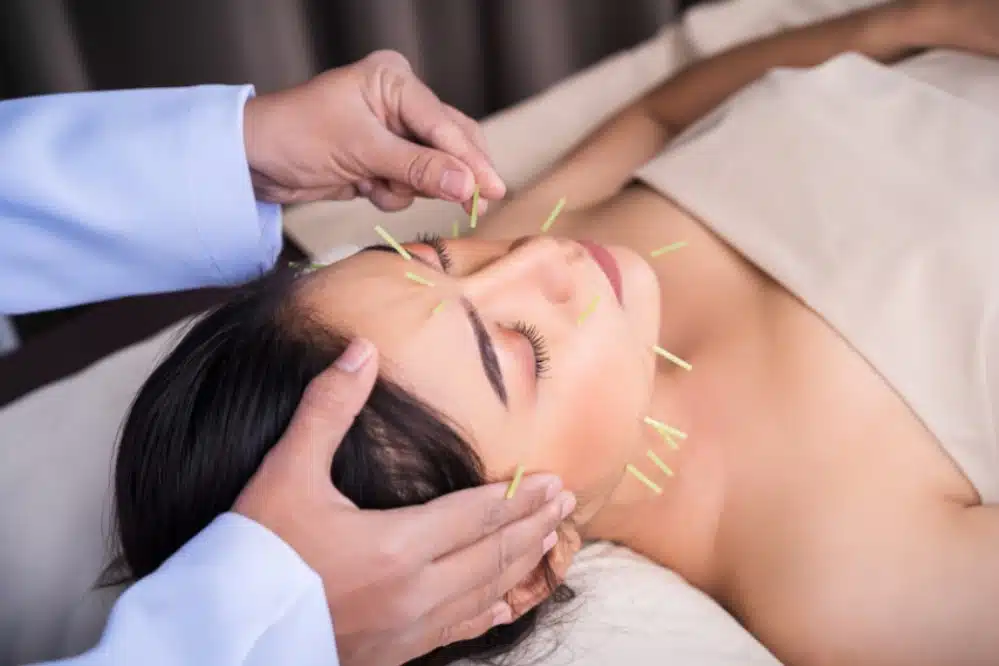
Acupuncture is an ancient, time-tested pillar of Traditional Chinese Medicine (TCM) that has evolved into a widely respected, evidence-based therapy within modern Western clinical settings. In classical TCM, acupuncture is utilized to optimize the flow of Qi (vital energy) along designated pathways called meridians. From a modern biomedical standpoint, acupuncture functions as a sophisticated form of peripheral neuro-modulation. By introducing sterile, ultra-thin, single-use filiform needles into specific anatomical coordinates (acupoints), the treatment stimulates local sensory nerve fibers. This micro-stimulation triggers a cascade of favorable physiological events:
- Endorphin Acceleration: Promotes the rapid systemic release of endogenous opioids (endorphins and enkephalins), which naturally down-regulate the brain’s perception of pain.
- Vascular Optimization: Induces localized vasodilation, increasing microcirculation and delivering oxygenated blood and reparative nutrients to damaged or ischemic tissues.
- Autonomic Modulation: Down-regulates sympathetic nervous system activity (“fight-or-flight”) while promoting parasympathetic dominance, effectively reducing systemic cortisol and inflammatory markers.
Discover the scientific validation behind this balancing treatment strategy in our clinical overview of Acupuncture Services.
Comparative Analysis: Philosophy, Experience, and Mechanisms
While both modalities excel at mitigating pain and restoring physical well-being, their clinical execution offers completely different patient experiences.
| Clinical Parameter | Chiropractic Care | Acupuncture |
| Primary Anatomical Target | Musculoskeletal architecture, joint capsules, and the central nervous system. | Peripheral nerve pathways, fascial planes, and microvascular networks. |
| Primary Therapeutic Action | Manual high-velocity, low-amplitude (HVLA) adjustments, joint mobilization, and functional rehabilitation. | Precise insertion and retention of fine needles to stimulate neurochemical pathways. |
| Immediate Physiological Goal | Decompress nerve roots, restore joint arthrokinematics, and correct biomechanical alignment. | Trigger endogenous analgesic release, modulate nociceptive pathways, and reduce systemic inflammation. |
| Patient Sensation | Controlled physical stretching, joint distraction, and occasional auditory joint cavitation (“popping”). | Subtle local awareness, mild paresthesia (tingling/heaviness), and deep systemic relaxation. |
Clinical Indications for Chiropractic Care
Chiropractic intervention is the premier conservative choice when your symptoms are driven by mechanical restrictions, structural imbalances, postural degradation, or direct nerve root compression.
1. Acute and Chronic Spinal Pain
Whether triggered by a sudden lifting injury or decades of sedentary office ergonomics, mechanical spine pain responds directly to chiropractic adjustments. When spinal segments become hypomobile, the body initiates a protective splinting reflex, causing surrounding muscle groups to lock into painful spasms. Manual manipulation breaks this cycle by restoring normal joint arthrokinematics, which instantly reduces nociceptive (pain) signaling from the joint capsule.
2. Radiculopathy and Sciatica
When an intervertebral disc bulges or herniates, it can impinge directly upon the adjacent nerve roots, sending sharp, radiating pain, numbness, or paresthesia down the pathway of the sciatic nerve. Chiropractors utilize precise manual adjustments, flex-distraction therapy, and gentle spinal decompression to reduce intradiscal pressure. This mechanical decompression encourages the displaced disc material to recede away from the sensitive nerve root, resolving radiculopathy at its anatomical source.
3. Cervicogenic Headaches and Migraines
A significant percentage of chronic headaches originate from structural dysfunction within the upper cervical spine. Subluxations of the C1–C3 vertebrae place direct mechanical tension on the sub occipital nerves and can compromise local vascular flow. Correcting the alignment and mobility of the upper cervical spine frequently yields a dramatic reduction in the frequency, duration, and severity of tension and cervicogenic headaches.
4. Postural Decompensation and Biomechanical Adaptation
Prolonged screen time and poor workplace ergonomics lead to common structural distortions such as Forward Head Posture (“text neck”) and Upper Crossed Syndrome. Chiropractic physicians evaluate the body as an integrated kinetic chain, employing targeted adjustments alongside active rehabilitative exercises to retrain the musculoskeletal system back into an energy-efficient, neutral alignment.

Clinical Indications for Acupuncture
Acupuncture serves as an ideal therapeutic selection when pain is widespread, linked to systemic metabolic conditions, rooted in deep myofascial trigger points, or heavily exacerbated by chronic neurological stress.
1. Widespread Myofascial Pain and Fibromyalgia
For conditions characterized by diffuse, multi-focal pain throughout the body, acupuncture offers systemic relief that localized manual therapies may not fully achieve. By modulating central pain processing within the spinal cord and brain, acupuncture alters the way the central nervous system interprets chronic pain signals, providing a valuable option for patients experiencing central sensitization.
2. Myofascial Trigger Point Deactivation (Dry Needling)
When chronic muscle tension develops into hyper-irritable, palpable nodules known as trigger points, manual therapy alone can sometimes be limited by depth. Acupuncturists can utilize direct needle stimulation to elicit a localized twitch response within the taut band of muscle. This involuntary micro-contraction instantly resets the muscle spindle, forcing the muscle fiber to relax, clearing built-up lactic acid, and restoring normal tissue perfusion.
3. Autonomic Regulation and Stress Management
Chronic physical pain rarely exists in isolation; it is deeply intertwined with elevated sympathetic nervous system activity, anxiety, and sleep fragmentation. Acupuncture acts as a potent regulator of the autonomic nervous system. Shifting the body out of a chronic stress response allows for cellular repair, lowers systemic inflammatory cytokines, and optimizes sleep architecture.
The Clinical Synergy: Integrating Both Disciplines for Maximum Efficacy
Many patients mistakenly view these two therapeutic options as mutually exclusive. In contemporary, evidence-based practice, the combination of chiropractic care and acupuncture often yields the highest therapeutic success rates. They approach the same clinical problem from complementary physiological angles. Consider the classic cycle of a musculoskeletal injury:
[Spinal Subluxation / Joint Fixation]
│
▼
[Protective Muscle Guarding & Spasms]
│
▼
[Ischemia, Localized Inflammation & Nerve Irritation]
│
▼
[Neurological Chronic Pain Loop]
Attempting to resolve this cycle by only treating the soft tissues via acupuncture may provide excellent temporary relief; however, if the underlying structural joint restriction remains uncorrected, the biomechanical strain will inevitably cause the muscle to spasm again. Conversely, performing a chiropractic adjustment on a patient whose muscles are profoundly guarded and hyper-tonic can be more difficult, and those highly tense tissues can pull the joint right back out of its proper alignment.
The Power of Concurrent Care
When integrated into a cohesive treatment strategy, the two modalities work in harmony:
- Acupuncture down-regulates local nerve sensitivity, breaks the myofascial spasm cycle, and floods the targeted area with oxygenated blood, rendering the surrounding soft tissues supple and receptive.
- Chiropractic Care then introduces precise mechanical forces to correct the underlying articular restrictions, re-align the structural framework, and eliminate long-term neurological interference.
This collaborative approach leads to highly comfortable adjustments, accelerated recovery times, and sustainable long-term functional outcomes.
Specialized Clinical Implementations at Winter Park Chiropractic
Beyond localized back or neck complaints, structural alignment and neuro-modulation play critical roles in specialized medical situations. Understanding these specific care pathways can guide you toward the right approach for your circumstance.
Auto Accident Injury & Whiplash Recovery
Motor vehicle collisions expose the human frame to sudden high-velocity deceleration forces. These forces cause micro-tears in ligamentous tissues and severe cervical subluxations, a condition commonly known as whiplash. Traditional emergency rooms often rule out fractures and discharge patients with prescriptions for muscle relaxants or analgesics, leaving the structural changes unaddressed.
[Auto Collision Impact] ──► [Soft Tissue Tears & Whiplash] ──► [Spinal Misalignment] ──►
[Chronic Scar Tissue]
Early intervention via comprehensive clinical treatment helps prevent the formation of rigid, restrictive scar tissue. Specialized physical medicine techniques ensure that your soft tissues heal with optimal flexibility, protecting your spine from premature degenerative joint diseases. Explore our dedicated process for handling these situations on our Auto Accident Treatment framework.
Integrated Myofascial Decompression: Chinese Cupping Therapy
To maximize the structural release achieved through spinal adjustments, modern integrative medicine often incorporates Chinese Cupping Therapy alongside acupuncture. While traditional adjustments and massage place a downward compressive force on body tissues, cupping provides a unique negative pressure pulling force. Using medical-grade cups applied directly to hyper-tonic muscle groups, this method creates a localized vacuum that pulls rigid fascial layers away from underlying muscle tissue. This negative pressure rapidly lifts stagnant fluid, stimulates lymphatic drainage, and draws oxygenated, nutrient-rich blood to ischemic muscle tissues. Review our advanced treatment methods by visiting our Chinese Cupping Therapy reference center.
Sports Performance Optimization and Injury Prevention
For competitive and recreational athletes, the primary goal of care expands beyond simple pain management to encompass global functional optimization. Repetitive athletic movements cause minor biomechanical asymmetries over time, altering the normal loading patterns of joints and increasing the risk of acute soft-tissue strains. Regular structural alignment optimization helps maximize muscle group activation, balances joint load distribution, and reduces recovery windows. To see how we work with athletes across Central Florida, explore our specialized Sports Injury Recovery Program.
Navigating Your Initial Visit: The Evaluation Process
Stepping into an integrative care facility for the first time should be straightforward and professional. A structured clinical onboarding ensures your safety and guarantees a customized treatment strategy.
Optimizing Your Recovery Strategy in Winter Park, FL
If you are ready to transition away from temporary symptom management and address the true root cause of your physical limitations, you do not have to navigate this decision alone. At Winter Park Chiropractic, we approach patient care through a comprehensive, multi-disciplinary lens. We recognize that every patient presents a unique clinical history, structural framework, and functional capacity. Our state-of-the-art facility is dedicated to conducting thorough diagnostic evaluations, analyzing your unique biomechanics, and crafting a personalized treatment pathway designed around your lifestyle. Whether your recovery requires the structural precision of advanced chiropractic adjustments, targeted functional rehabilitation, or a comprehensive combination approach to restore your vitality, our team is committed to guiding you at every stage.