
Degenerative Disc Disease Winter Park
Expert Non-Surgical Treatment for Degenerative Disc Disease in Winter Park
Persistent back or neck pain can quietly erode your quality of life. What begins as mild stiffness may gradually evolve into daily discomfort that affects your work, sleep, exercise routine, and overall well-being. For many individuals in Winter Park, one of the underlying causes of chronic spinal pain is Degenerative Disc Disease (DDD).
At Winter Park Chiropractic, we provide advanced, non-surgical treatment for Degenerative Disc Disease in Winter Park. Our approach goes beyond symptom relief. Instead, we focus on restoring spinal mechanics, reducing inflammation, relieving nerve irritation, and strengthening long-term structural support.
If you are searching for safe, effective care for disc-related pain, understanding the condition and your treatment options is essential.
BOOK AN APPOINTMENT
with the Best Chiropractor in Winter Park , Florida
The Role of Spinal Discs in Your Overall Mobility
To understand Degenerative Disc Disease, it is important to first understand the function of spinal discs.
To understand Degenerative Disc Disease, it is important to first understand the function of spinal discs. Your spine consists of vertebrae stacked on top of one another. Between each vertebra lies a disc a strong, flexible cushion that absorbs shock and allows fluid movement. Each disc has:
- A soft inner core (nucleus pulposus)
- A tough outer ring (annulus fibrosus)
These discs allow you to bend, twist, sit, lift, and move comfortably. However, over time, discs can begin to wear down.
As hydration decreases and elasticity declines, discs lose their ability to absorb pressure effectively. Consequently, the surrounding joints, ligaments, and nerves may experience increased stress. When these changes begin to cause pain or neurological symptoms, the condition is referred to as Degenerative Disc Disease.

The Role of Spinal Discs in Your Overall Mobility
To understand Degenerative Disc Disease, it is important to first understand the function of spinal discs.
To understand Degenerative Disc Disease, it is important to first understand the function of spinal discs. Your spine consists of vertebrae stacked on top of one another. Between each vertebra lies a disc a strong, flexible cushion that absorbs shock and allows fluid movement. Each disc has:
- A soft inner core (nucleus pulposus)
- A tough outer ring (annulus fibrosus)
These discs allow you to bend, twist, sit, lift, and move comfortably. However, over time, discs can begin to wear down.
As hydration decreases and elasticity declines, discs lose their ability to absorb pressure effectively. Consequently, the surrounding joints, ligaments, and nerves may experience increased stress. When these changes begin to cause pain or neurological symptoms, the condition is referred to as Degenerative Disc Disease.

Why Disc Degeneration Occurs: Understanding the Underlying Triggers
Although aging is a natural factor in disc changes, degeneration is often influenced by additional variables.
1: Gradual Age-Related Breakdown
As the body ages, spinal discs naturally lose water content. This dehydration reduces flexibility and resilience, making the discs more vulnerable to stress.
2: Repetitive Stress and Occupational Demands
Individuals who sit for prolonged periods, lift heavy objects, or perform repetitive movements often place continuous strain on their spine. Over time, this accelerates disc wear.
3: Traumatic Injuries
Car accidents, sports injuries, and falls can damage disc fibers. Even minor trauma may initiate early degeneration.
4: Structural Imbalances
Poor posture, spinal misalignment, and muscle imbalances can create uneven pressure distribution across discs.
5: Lifestyle Factors
Smoking, poor nutrition, limited exercise, and obesity may impair circulation and reduce the disc’s ability to heal.
At Winter Park Chiropractic, we assess each of these contributors to create a targeted treatment plan that addresses both symptoms and root causes.
Recognizing the Early and Advanced Signs of Degenerative Disc Disease
Degenerative Disc Disease does not present the same way in every patient. Symptoms vary depending on the location and severity of disc changes.
Lower Back (Lumbar Spine) Symptoms
When degeneration occurs in the lumbar spine, patients commonly report:
- Persistent low back pain
- Discomfort that worsens after sitting
- Pain radiating into the hips or legs
- Stiffness upon standing
- Episodes of muscle spasms
Neck (Cervical Spine) Symptoms
When the cervical spine is involved, symptoms may include:
- Chronic neck stiffness
- Headaches at the base of the skull
- Pain traveling into the shoulders or arms
- Tingling or numbness in the hands
- Reduced range of motion
In some cases, pain may fluctuate. For instance, patients often experience stiffness in the morning or after inactivity. However, as degeneration progresses, discomfort may become more consistent and intense.
Because untreated DDD can lead to herniated discs or nerve compression, early evaluation is strongly recommended.
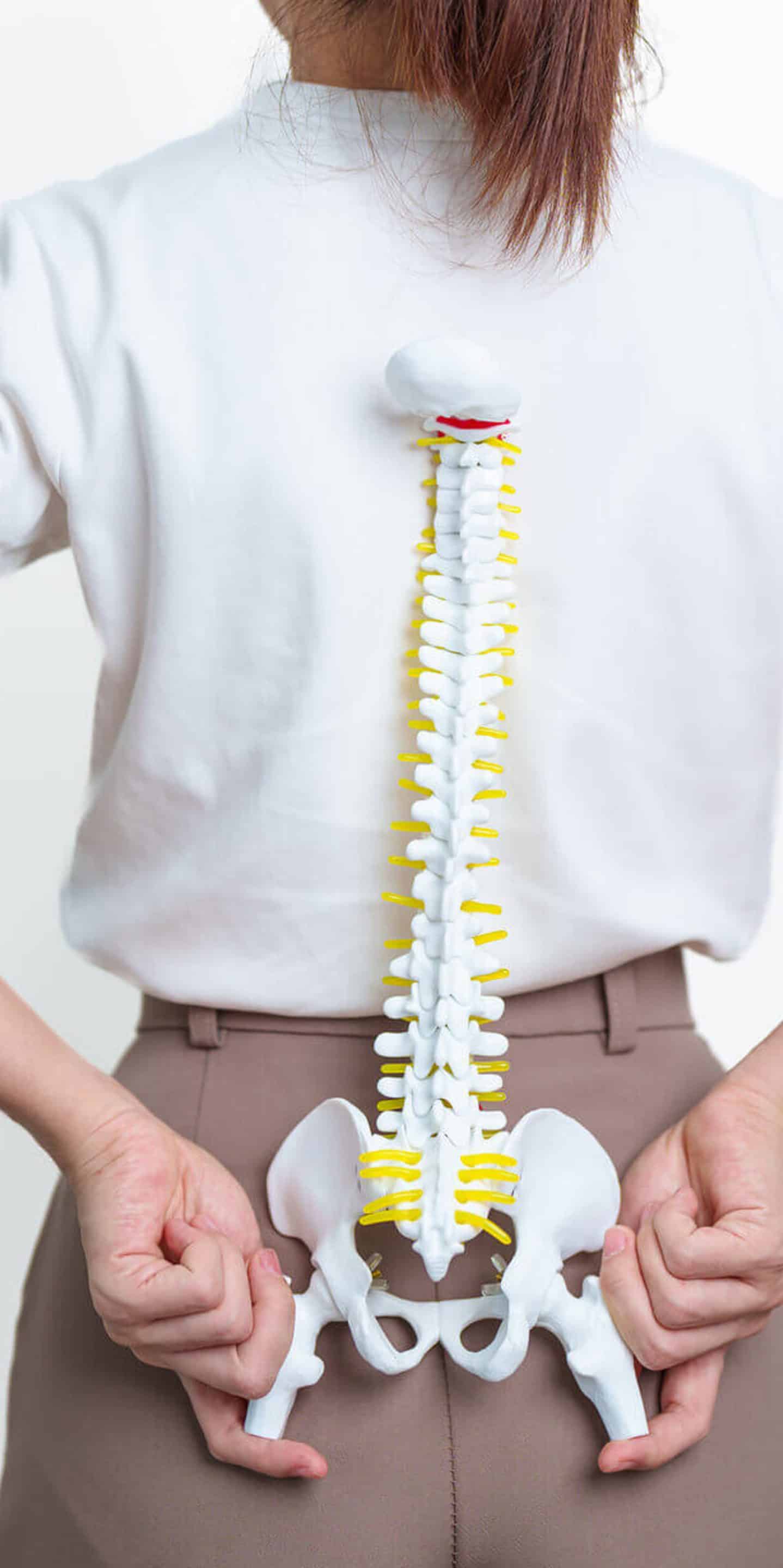
Recognizing the Early and Advanced Signs of Degenerative Disc Disease
Degenerative Disc Disease does not present the same way in every patient. Symptoms vary depending on the location and severity of disc changes.
Lower Back (Lumbar Spine) Symptoms
When degeneration occurs in the lumbar spine, patients commonly report:
- Persistent low back pain
- Discomfort that worsens after sitting
- Pain radiating into the hips or legs
- Stiffness upon standing
- Episodes of muscle spasms
Neck (Cervical Spine) Symptoms
When the cervical spine is involved, symptoms may include:
- Chronic neck stiffness
- Headaches at the base of the skull
- Pain traveling into the shoulders or arms
- Tingling or numbness in the hands
- Reduced range of motion
In some cases, pain may fluctuate. For instance, patients often experience stiffness in the morning or after inactivity. However, as degeneration progresses, discomfort may become more consistent and intense.
Because untreated DDD can lead to herniated discs or nerve compression, early evaluation is strongly recommended.

Advanced Diagnostic Approach at Winter Park Chiropractic
Effective treatment begins with precise diagnosis. At Winter Park Chiropractic, we take a comprehensive approach.
Detailed Clinical Assessment
We begin with an in-depth consultation to review your health history, activity level, and symptom progression.
Functional Movement Evaluation
Next, we assess posture, spinal alignment, muscle balance, and joint mobility.
Neurological Screening
If nerve involvement is suspected, we evaluate reflexes, sensation, and muscle strength.
Imaging When Necessary
When clinically appropriate, we may recommend X-rays or MRI imaging to assess disc height and structural integrity.
Importantly, imaging findings are interpreted alongside clinical presentation. This ensures your treatment plan is accurate and individualized.
Non-Surgical Solutions for Degenerative Disc Disease in Winter Park
Although the word “degenerative” may sound alarming, surgery is rarely required. In fact, most patients respond extremely well to conservative chiropractic care.
At Winter Park Chiropractic, our treatment approach is structured, progressive, and evidence-based.
Precision Spinal Realignment
Misaligned vertebrae increase abnormal stress on degenerating discs. Through controlled chiropractic adjustments, we restore proper joint motion and alignment.
As alignment improves, pressure on affected discs decreases. This not only reduces inflammation but also enhances nerve communication and overall spinal function.
Spinal Decompression Therapy for Disc Relief
For patients with disc compression or radiating nerve pain, spinal decompression therapy can be highly beneficial.
This advanced technique gently stretches the spine using controlled traction. As space between vertebrae increases:
-
Intradiscal pressure decreases
-
Nutrient flow improves
-
Nerve compression is reduced
-
Pain gradually subsides
Over time, this process supports disc recovery and improved comfort.

Non-Surgical Solutions for Degenerative Disc Disease in Winter Park
Although the word “degenerative” may sound alarming, surgery is rarely required. In fact, most patients respond extremely well to conservative chiropractic care.
At Winter Park Chiropractic, our treatment approach is structured, progressive, and evidence-based.
Precision Spinal Realignment
Misaligned vertebrae increase abnormal stress on degenerating discs. Through controlled chiropractic adjustments, we restore proper joint motion and alignment.
As alignment improves, pressure on affected discs decreases. This not only reduces inflammation but also enhances nerve communication and overall spinal function.
Spinal Decompression Therapy for Disc Relief
For patients with disc compression or radiating nerve pain, spinal decompression therapy can be highly beneficial.
This advanced technique gently stretches the spine using controlled traction. As space between vertebrae increases:
-
Intradiscal pressure decreases
-
Nutrient flow improves
-
Nerve compression is reduced
-
Pain gradually subsides
Over time, this process supports disc recovery and improved comfort.

Corrective Rehabilitation and Core Strengthening
Long-term relief requires muscular support. Therefore, we design customized exercise programs that focus on:
-
Core stabilization
-
Postural correction
-
Flexibility enhancement
-
Movement retraining
By strengthening surrounding structures, we reduce excessive strain on compromised discs.
Soft Tissue and Myofascial Therapy
Muscle tightness frequently accompanies disc degeneration. Targeted soft tissue therapy improves circulation, reduces muscle guarding, and supports healing.
This integrative approach ensures both structural and muscular components are addressed.
The Three Phases of Degenerative Disc Disease Care
At Winter Park Chiropractic, treatment typically progresses through structured phases.
Phase 1: Inflammation and Pain Reduction
The initial focus is calming irritated tissues and stabilizing the spine.
Phase 2: Functional Correction
Once pain improves, attention shifts to restoring alignment, mobility, and strength.
Phase 3: Long-Term Stability and Prevention
Finally, we implement maintenance strategies to protect spinal health and prevent future flare-ups. This phased approach ensures both short-term relief and long-term resilience.
Lifestyle Strategies to Slow Disc Degeneration
In addition to in-office care, lifestyle modifications play a crucial role in managing Degenerative Disc Disease. Patients are encouraged to:
- First and foremost, maintain proper posture while sitting and standing to reduce unnecessary spinal strain.
- Additionally, use ergonomic workstations to support correct alignment during long periods of work.
- Equally important, maintain a healthy body weight to minimize excess pressure on spinal discs.
- Moreover, stay properly hydrated to help support disc elasticity and overall spinal health.
- Finally, avoid prolonged inactivity, as extended sitting or immobility can increase stiffness and discomfort.

The Three Phases of Degenerative Disc Disease Care
At Winter Park Chiropractic, treatment typically progresses through structured phases.
Phase 1: Inflammation and Pain Reduction
The initial focus is calming irritated tissues and stabilizing the spine.
Phase 2: Functional Correction
Once pain improves, attention shifts to restoring alignment, mobility, and strength.
Phase 3: Long-Term Stability and Prevention
Finally, we implement maintenance strategies to protect spinal health and prevent future flare-ups. This phased approach ensures both short-term relief and long-term resilience.
Lifestyle Strategies to Slow Disc Degeneration
In addition to in-office care, lifestyle modifications play a crucial role in managing Degenerative Disc Disease. Patients are encouraged to:
- First and foremost, maintain proper posture while sitting and standing to reduce unnecessary spinal strain.
- Additionally, use ergonomic workstations to support correct alignment during long periods of work.
- Equally important, maintain a healthy body weight to minimize excess pressure on spinal discs.
- Moreover, stay properly hydrated to help support disc elasticity and overall spinal health.
- Finally, avoid prolonged inactivity, as extended sitting or immobility can increase stiffness and discomfort.
Begin Your Recovery Journey Today
Living with chronic disc pain is not something you have to accept. With the right combination of spinal correction, decompression therapy, rehabilitation, and lifestyle guidance, significant improvement is possible. If you are searching for expert care for Degenerative Disc Disease in Winter Park, the team at Winter Park Chiropractic is ready to help you regain comfort, mobility, and confidence. Visit winterparkchiropractic.com to schedule your consultation and take the first step toward restoring your spine health naturally and effectively.
Frequently Asked Questions About Degenerative Disc Disease in Winter Park
1. What is Degenerative Disc Disease?
Degenerative Disc Disease is the gradual breakdown of spinal discs due to aging, wear and tear, or injury. It can cause back or neck pain when the discs lose flexibility and cushioning.
2. What are the common symptoms?
Common symptoms include persistent back or neck pain, stiffness, pain that worsens with sitting, and sometimes radiating pain, numbness, or tingling in the arms or legs.
3. Can Degenerative Disc Disease be treated without surgery?
Yes. Most cases respond well to non-surgical treatments such as chiropractic adjustments, spinal decompression, and corrective exercises.
4. How long does treatment take?
Improvement varies by individual, but many patients notice relief within a few weeks of consistent chiropractic care.
5. When should I see a chiropractor?
You should seek care if pain lasts more than two weeks, worsens over time, or includes radiating pain, numbness, or weakness.